With so many attractions within walking distance, planning your time is essential.
You don’t need to visit everything in one day. In fact, trying to squeeze too many monuments into a single itinerary can make the experience tiring.
Beyond the Colosseum: 10 Hidden Gems to Discover in Rome’s Celio Neighbourhood, Discover a Different Side of Rome Just Behind the Colosseum
Most visitors come to Rome with one attraction at the top of their list: the Colosseum.
And understandably so. Few monuments in the world can match its history, architecture and atmosphere. But what if we told you that, just a few streets away, there is an entirely different side of Rome waiting to be discovered?
Beyond the busy streets surrounding the amphitheatre lies the Celio neighbourhood, one of the city’s most fascinating yet frequently overlooked areas.
Here, ancient Roman houses hide beneath medieval churches, quiet gardens preserve centuries-old monuments, and extraordinary archaeological discoveries tell stories that many visitors never get to hear.
Unlike the better-known tourist routes, Celio offers a more relaxed experience. You can wander through narrow historic streets, discover remarkable underground sites, admire early Christian mosaics and enjoy peaceful green spaces without travelling far from the Colosseum.
At Discover Rome Tours, we believe that some of the most memorable experiences in Rome happen when you step slightly away from the usual tourist path.
So, if you have already explored the main monuments or simply want to discover something different, join us on a journey through Celio and its hidden treasures.
1. Case Romane del Celio: Discover an Extraordinary Underground World
If there is one attraction we would recommend to visitors looking for something genuinely different near the Colosseum, it is the Case Romane del Celio.
Located beneath the Basilica of Saints John and Paul, this remarkable archaeological complex is one of the most fascinating examples of underground Rome.
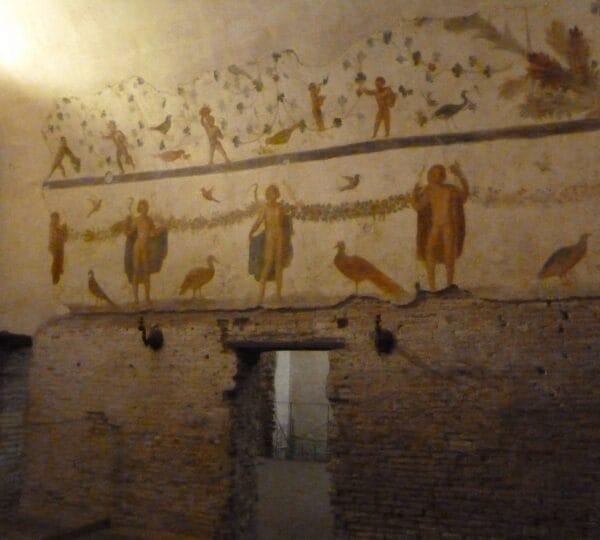
The site contains the remains of Roman buildings that developed over several centuries. What originally began as a multi-storey residential and commercial structure was gradually transformed into an elegant private residence.
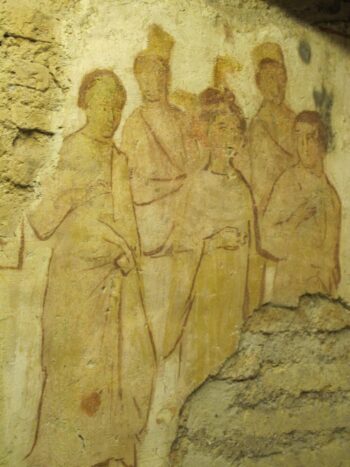
Today, visitors can explore rooms decorated with remarkably preserved frescoes, painted architectural details and religious imagery.
One of the most interesting aspects of the site is the way it reflects the transformation of Roman society between the ancient pagan world and early Christianity.
The rooms preserve evidence of different historical periods, allowing visitors to understand how buildings changed their purpose and appearance as the city evolved.
Walking through these underground spaces feels completely different from visiting the large open-air archaeological sites around the Colosseum.
Instead of monumental columns and enormous public buildings, you encounter intimate rooms, decorative paintings and traces of everyday Roman life.
Why visit?
The Case Romane are particularly rewarding for history enthusiasts, archaeology lovers and travellers who want to explore something beyond the usual tourist attractions.
Local tip: The entrance is located near the Basilica of Saints John and Paul. Visiting hours and ticket arrangements should be checked before your visit. Photography is not permitted inside the complex.
2. Basilica of Saints John and Paul: A Church with Ancient Roman Secrets
Above the Case Romane stands the Basilica of Saints John and Paul, another fascinating stop in the Celio neighbourhood.
At first glance, it may look like a peaceful historic church surrounded by a quiet square. However, its connection with the archaeological remains underneath makes it particularly interesting.
The basilica is traditionally associated with two Roman soldiers, John and Paul, who were believed to have been martyred during the fourth century.
According to Christian tradition, they were executed because of their refusal to abandon their faith.
The church was constructed above the earlier Roman buildings, creating a remarkable connection between the ancient residential area and the development of Christianity in Rome.
Its interior is worth exploring for its religious atmosphere, historical details and beautiful architecture.
But perhaps the most fascinating part is understanding that the history of the church cannot be separated from the ancient structures beneath it.
Why visit?
It is an excellent stop for anyone interested in understanding how Rome gradually transformed from the capital of the pagan Roman Empire into one of the most important centres of Christianity.
Local tip: Combine your visit with the Case Romane del Celio. They are part of the same historic complex and make an especially rewarding cultural experience.
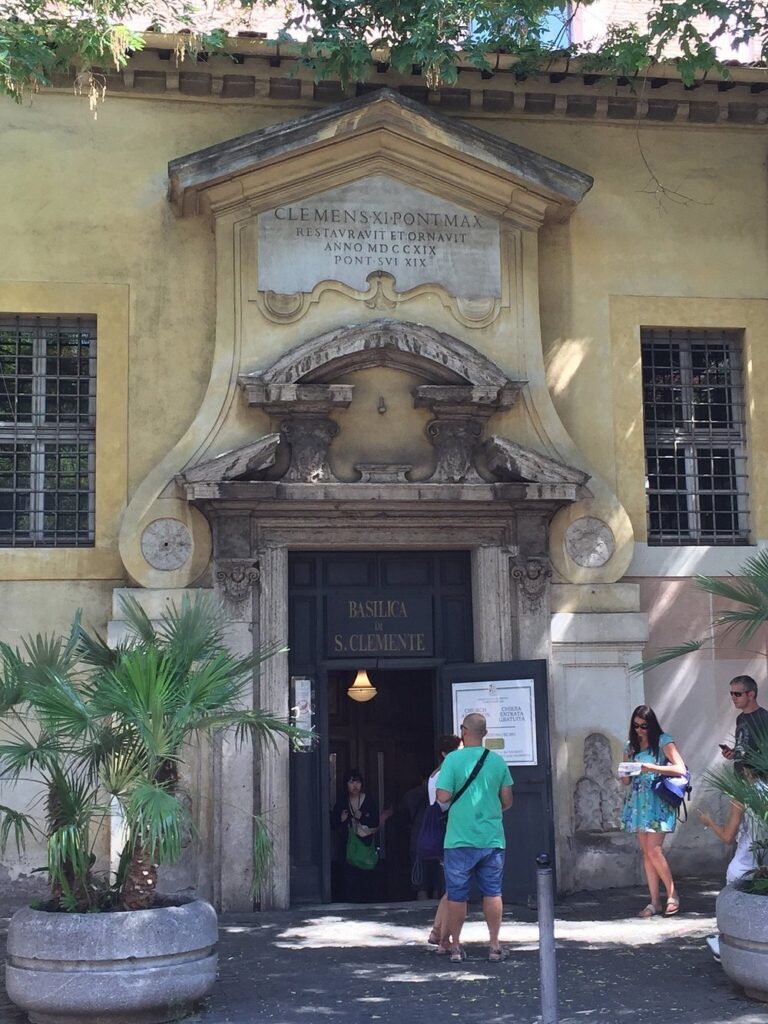
3. Villa Celimontana: A Peaceful Garden Hidden Behind the Colosseum
After exploring archaeological sites and historic churches, Villa Celimontana offers a welcome change of atmosphere.
This beautiful public garden is one of the most pleasant green spaces in the Celio district.
Located on the hill between the Colosseum and the Baths of Caracalla, Villa Celimontana was originally developed as a Renaissance villa in the sixteenth century.
The Mattei family transformed the area into a beautiful private estate, adding architectural decorations, sculptures and garden features.
Today, it is a public park where visitors can enjoy mature trees, peaceful paths and historic details.
One of its most interesting features is the Egyptian obelisk traditionally associated with Ramesses II. It adds an unexpected Egyptian connection to this quiet corner of Rome.
The garden also contains archaeological fragments and decorative elements that reflect its long history.
Unlike some of Rome’s busiest public spaces, Villa Celimontana can feel surprisingly peaceful, making it an excellent place to take a break from sightseeing.
Why visit?
It is ideal for couples, families and anyone who wants to experience a quieter, greener side of Rome.
Local tip: Visit during the warmer months when the trees provide welcome shade. The garden is also a lovely place for a relaxing walk after exploring the Colosseum area.
4. Santo Stefano Rotondo: One of Rome’s Most Unusual Churches
If you enjoy discovering unusual architecture, Santo Stefano Rotondo is a place you should not overlook.
Built in the fifth century, this historic church is particularly famous for its circular architectural design.
Unlike the traditional rectangular layout of most Roman basilicas, Santo Stefano Rotondo features a central circular space surrounded by columns and concentric architectural elements.
Its unusual design creates a very different atmosphere from the churches most visitors encounter in Rome.
The building was dedicated to Saint Stephen, the first Christian martyr, and has undergone several changes throughout its history.
Inside, visitors can also find a series of historical paintings depicting scenes of Christian martyrdom.
These works are particularly striking and provide insight into the religious culture and artistic traditions of the period.
The church is an excellent example of how early Christian architecture developed by adapting and experimenting with different architectural forms.
Why visit?
For architecture enthusiasts, art lovers and travellers who enjoy discovering lesser-known religious monuments.
Local tip: Check visiting hours before arriving. Churches in this area may have restricted access during religious services or restoration work.
5. Basilica of Santi Quattro Coronati: A Medieval Fortress in the Heart of Rome
One of the most atmospheric places in the Celio district is the Basilica of Santi Quattro Coronati.
From the outside, the complex looks more like a medieval fortress than a traditional church.
Its defensive appearance is not accidental. Throughout its history, the religious complex was fortified and adapted to respond to the political and military uncertainties of medieval Rome.
The complex is dedicated to four Christian martyrs, traditionally identified as four sculptors who refused to create an image connected with pagan worship.
One of its most remarkable spaces is the Chapel of Saint Sylvester, famous for its medieval frescoes depicting the legendary conversion of Emperor Constantine.
The cloister is another highlight, offering a peaceful architectural space that feels far removed from the busy streets outside.
Visiting Santi Quattro Coronati is like stepping into a different historical period.
While the Colosseum tells the story of imperial Rome, this complex introduces visitors to the medieval city, its religious traditions and its political history.
Why visit?
It is particularly rewarding for visitors interested in medieval art, architecture and the less familiar historical periods of Rome.
Local tip: Access to some areas, including the chapel and cloister, is subject to specific visiting arrangements. Check opening times and visitor instructions before going.
6. Parco Archeologico del Celio and Museo della Forma Urbis: Discover Ancient Rome Through Its Marble Map
One of the most interesting recent additions to the Celio visitor experience is the Parco Archeologico del Celio and the Museo della Forma Urbis.
This area offers a fascinating combination of archaeology, greenery and urban history.
The archaeological park occupies part of the Celio hill, in an area close to the Colosseum and the remains associated with the Temple of Claudius.
The outdoor space contains architectural fragments and archaeological remains that provide a glimpse into the city’s long development.
But the real highlight for history enthusiasts is the Museo della Forma Urbis.
The museum displays surviving fragments of the Forma Urbis Romae, an enormous marble map of ancient Rome created during the reign of Emperor Septimius Severus in the early third century AD.
The original map was displayed on a wall and represented buildings, streets and urban spaces across a large portion of the city.
Imagine being able to study a detailed representation of Rome nearly 1,800 years ago!
Although only fragments of the original map survive, they offer valuable information about ancient urban planning and the layout of imperial Rome.
The museum presents these fragments in a way that helps visitors appreciate the extraordinary scale of the ancient city.
Why visit?
This is an excellent choice for travellers who are interested in archaeology, ancient cartography and the development of Rome as a city.
Local tip: The archaeological park and museum have different admission arrangements. The park is free to enter, while the museum requires a separate ticket. Check the official schedule before visiting.
7. Santa Maria in Domnica: Discover a Beautiful Early Christian Mosaic
Located in Piazza della Navicella, Santa Maria in Domnica is another beautiful church that deserves more attention.
Its history dates back to early Christian Rome, although the building underwent important restoration and reconstruction during the ninth century under Pope Paschal I.
The church is particularly famous for its magnificent apse mosaic.
The artwork depicts the Virgin Mary surrounded by angels, with Pope Paschal I represented at her feet.
Its colours, composition and religious symbolism make it an important example of early medieval Christian art.
Unlike some of Rome’s larger and more famous basilicas, Santa Maria in Domnica often receives fewer visitors, allowing you to appreciate its artistic details in a quieter setting.
The church also provides an interesting connection with the wider history of the Celio district and its religious development.
Why visit?
It is a wonderful stop for anyone interested in Byzantine-influenced mosaics, early Christian art and Rome’s religious history.
Local tip: Combine it with Villa Celimontana, which is located just nearby.
8. Fontana della Navicella: A Small Monument with a Curious Story
Just outside Santa Maria in Domnica stands the Fontana della Navicella, one of the most unusual small monuments in the neighbourhood.
The fountain takes the shape of a Roman ship, or navicella in Italian.
Its design is associated with an ancient marble ship sculpture traditionally linked to the military sailors of the Roman fleet.
The original sculpture was adapted into a fountain during the Renaissance, creating the monument visitors can admire today.
It is a relatively small attraction, but it provides an interesting example of how Renaissance Rome incorporated ancient objects into its urban landscape.
The fountain is also a lovely photographic detail and a natural stopping point when exploring this part of Celio.
Why visit?
Because sometimes the most interesting discoveries are not enormous monuments but small historical details hidden in everyday urban spaces.
Local tip: Take a moment to look around Piazza della Navicella. The combination of the fountain, church and surrounding streets captures the atmosphere of the neighbourhood beautifully.
9. Clivus Scauri: Walk Along an Ancient Roman Street
For visitors who enjoy discovering Rome on foot, Clivus Scauri is one of the most atmospheric streets in the Celio district.
The street preserves traces of its ancient layout and provides a glimpse of how Roman neighbourhoods developed over time.
Walking along it, you can appreciate the relationship between ancient buildings, medieval structures and later architectural changes.
The most fascinating aspect is the way different historical periods coexist in the same urban space.
Archaeological remains, brickwork, arches and later residential buildings create a unique atmosphere.
Unlike the monumental scale of the Colosseum, Clivus Scauri offers a more intimate experience of Rome.
It reminds us that the city’s history is not limited to its famous archaeological sites. It is also embedded in its streets, buildings and everyday surroundings.
Why visit?
It is perfect for curious travellers who enjoy walking through historic neighbourhoods and noticing architectural details.
Local tip: Explore slowly and look above street level. Many of the most interesting historical details are found in the buildings themselves.
10. Porta San Sebastiano and the Museum of the Walls: Discover Rome’s Ancient Defences
If you have more time and want to extend your exploration beyond the immediate Celio area, consider visiting Porta San Sebastiano.
This impressive city gate formed part of the Aurelian Walls, the enormous defensive circuit constructed during the third century AD to protect Rome.
The walls were built during a period when the Roman Empire faced increasing military pressure, making the city’s defence a growing priority.
Porta San Sebastiano is one of the most impressive surviving entrances in the ancient defensive system.
Today, the Museum of the Walls provides an opportunity to learn about the construction, development and military importance of Rome’s fortifications.
Visitors can discover different sections of the walls and understand how this extraordinary defensive structure evolved over the centuries.
The site also offers a connection to the historic Appian Way, one of the most famous ancient roads leading out of Rome.
Why visit?
It is an excellent choice for history lovers interested in Roman engineering, military architecture and the city’s defensive infrastructure.
Local tip: This is a longer extension rather than a quick stop beside the Colosseum. Allow additional time for the walk and check the museum’s opening arrangements.
A Local Walking Itinerary: How to Explore the Celio Neighbourhood
One of the best ways to discover Celio is to explore it on foot.
The neighbourhood is relatively compact, but its attractions are spread across different streets and green spaces. A little planning will help you enjoy the area without rushing.
Here is the route we recommend.
Stop 1: Start near the Colosseum
Leave the busiest tourist area and head towards the Caelian Hill.
Stop 2: Explore the Basilica of Saints John and Paul
Discover the church and, if available, visit the underground Roman houses beneath it.
Stop 3: Walk along Clivus Scauri
Enjoy one of the neighbourhood’s most atmospheric historic streets.
Stop 4: Visit Villa Celimontana
Take a relaxing break in the gardens and discover the Egyptian obelisk.
Stop 5: Discover Santa Maria in Domnica
Admire the church’s remarkable mosaic and stop at the nearby Navicella Fountain.
Stop 6: Continue towards Santo Stefano Rotondo
Explore its unusual circular architecture.
Stop 7: Finish at Santi Quattro Coronati or the Celio Archaeological Park
Choose between a medieval architectural experience and an archaeological visit, depending on your interests and opening times.
We recommend allowing approximately three to four hours for a relaxed visit, particularly if you plan to enter several attractions.
For Porta San Sebastiano, plan a separate extension rather than trying to include it in the same short walking route.
Practical Tips for Exploring Celio
Before setting off, there are a few things worth knowing.
Wear comfortable shoes. Like much of Rome, Celio has cobbled streets, uneven surfaces and some uphill sections.
Check church opening hours. Some religious buildings close during midday or restrict access during services.
Book underground attractions in advance. The Case Romane del Celio and other archaeological sites may have specific visiting arrangements.
Plan around the weather. Villa Celimontana is particularly pleasant in spring and autumn, while its shaded paths are welcome during warmer months.
Allow enough time. The best way to enjoy Celio is to slow down rather than rush from one monument to another.
Respect religious spaces. Dress appropriately and remember that churches are active places of worship.
For official information about the archaeological park and museum, consult the Rome Capital Cultural Heritage website.
Why Celio Deserves a Place on Your Rome Itinerary
The beauty of Celio is that it offers a different perspective on Rome.
The Colosseum represents the power and spectacle of the Roman Empire. The ancient houses beneath the Basilica of Saints John and Paul reveal everyday domestic life. The churches introduce the development of Christianity and medieval Rome, while Villa Celimontana offers a glimpse of the city’s elegant historic gardens.
And all of this can be discovered within a relatively short distance of one of the world’s most famous monuments.
For visitors who want to go beyond the usual sightseeing route, Celio is an opportunity to discover a more intimate and authentic side of the Eternal City.
At Discover Rome Tours, we believe that understanding Rome means looking beyond its most famous landmarks and appreciating the many stories that make the city unique.
So, next time you visit the Colosseum, consider taking a different direction. You may discover some of your favourite memories of Rome just around the corner.
Why Explore the Colosseum Area with a Local Guide?The Colosseum is impressive on its own, but the real magic of ancient Rome comes from understanding how everything connects.
The Roman Forum was the centre of political life. Palatine Hill became the home of emperors. Ludus Magnus trained gladiators, while Circus Maximus hosted spectacular chariot races.
These places were not isolated attractions. They were part of one extraordinary city.
A knowledgeable local guide can help you understand the people, events and stories behind the monuments, turning what might otherwise look like ancient stones into a fascinating historical experience.
At Discover Rome Tours, we believe that every visitor deserves more than just a photograph of the Colosseum. Our goal is to help you discover the history, architecture and stories that make Rome so special.
If you’re planning your visit, explore our Colosseum guided tours and discover ancient Rome with the help of passionate local guides.
Frequently Asked Questions About Hidden Gems Near the Colosseum
1. What is the Celio neighbourhood in Rome?
Celio, also known as the Caelian Hill, is one of Rome’s historic hills, located just southeast of the Colosseum. It is known for its ancient Roman remains, historic churches, archaeological sites and peaceful gardens.
2. Is Celio within walking distance of the Colosseum?
Yes. The main attractions of Celio are within walking distance of the Colosseum. Depending on your destination, you can reach the neighbourhood in approximately 5–15 minutes on foot.
3. What are the best hidden gems near the Colosseum?
Some of the most interesting lesser-known attractions include the Case Romane del Celio, Santo Stefano Rotondo, Santi Quattro Coronati, Villa Celimontana and the Museo della Forma Urbis.
4. What are the Case Romane del Celio?
The Case Romane del Celio are an underground archaeological complex beneath the Basilica of Saints John and Paul. They preserve ancient residential spaces and remarkable frescoes that illustrate different periods of Roman history.
5. Is Villa Celimontana free to visit?
Yes. Villa Celimontana is a public garden with free general admission. Opening hours vary according to the season, and special events may have separate arrangements.
6. Can I visit the Celio Archaeological Park and Museo della Forma Urbis?
Yes. The archaeological park is generally free to enter, while the Museo della Forma Urbis requires a separate ticket. The museum has its own opening schedule and is normally closed on Mondays.
7. Is the Celio neighbourhood suitable for families?
Absolutely. Its gardens, historic streets and fascinating archaeological attractions make it an interesting area for families. Some underground sites and churches may be less suitable for very young children, so it is worth planning the route according to their interests and energy levels.
8. How long does it take to explore Celio?
A short walk through the neighbourhood can take around one hour. However, if you want to visit the underground Roman houses, churches, gardens and archaeological museum, we recommend allowing three to four hours.
9. Is Celio less crowded than the area immediately around the Colosseum?
Generally, yes. Although some attractions can become busy, many parts of Celio have a quieter residential atmosphere compared with the streets directly surrounding the Colosseum.
10. Can I combine a Colosseum visit with a walk through Celio?
Definitely. Celio is an excellent extension to a Colosseum visit. You can explore the main amphitheatre in the morning and spend the afternoon discovering the neighbourhood’s churches, archaeological treasures and gardens.
Discover Rome Beyond the Famous Monuments
Rome has countless stories waiting to be discovered, and some of the most fascinating ones are found away from the main tourist routes.
From the underground Roman houses of Celio to the peaceful gardens of Villa Celimontana, this neighbourhood offers a wonderful opportunity to experience the city’s history from a different perspective.
At Discover Rome Tours, our passion is helping visitors understand the history, culture and hidden treasures of the Eternal City.
Whether you’re visiting the Colosseum for the first time or returning to explore more of Rome, we hope this guide inspires you to discover something new.
Explore Rome with Discover Rome Tours and experience the city beyond the ordinary.